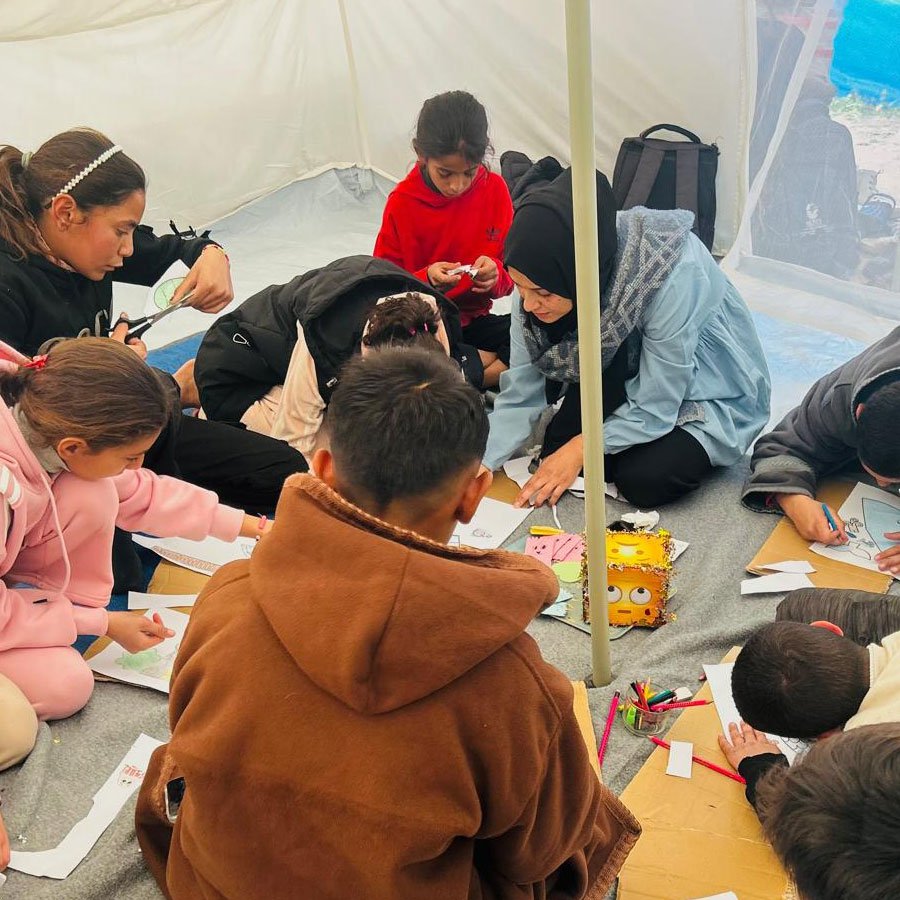
The Light Room A small, repeatable space where children can sit, draw, and breathe — without being asked to explain themselves. Not a classroom. Not therapy. Not performance. View current vacancies Why Light Rooms exist After war and displacement, children do not lose creativity first.They lose rhythm.They lose focus.They lose the ability to sit safely with themselves.A Light Room restores one thing first: calm — through quiet structure and repetition. Call To Action Supporting HeadingLorem ipsum dolor sit amet, consec What happens in a Light Room Children choose how to engage. Silence is allowed. Nothing is forced. Small group settingQuiet arrival and settlingBasic art materials providedFree drawing or makingNo discussion requiredNo outcomes expected Book Now A Light Room is A protected creative spaceLocally facilitatedArt-first and child-ledDignity-protected A Light Room is not Content creationPublic storytellingTherapy or diagnosisTrauma exposure How Light Rooms are held Light Rooms are facilitated locally by trusted adults who return consistently.Facilitators:Hold the same calm structure each sessionDo not interpret drawingsDo not direct emotional expressionPrioritize safety and presenceWe do not film sessions or share children’s faces or identities. Call To Action Supporting HeadingLorem ipsum dolor sit amet, consec This work is fragile Light Rooms are not guaranteed.Each session depends on materials, facilitators, and continuity.If support pauses, the Light Room pauses.That is the reality. Call to Action Help keep the Light Room open Your support funds materials, facilitation, and continuity. [ Support the Light Room ]